Experiencing issues with your touchpad on a Windows 11 32-bit system, particularly if you suspect a Broadcom touchpad missing driver for Windows 11 32-bit?
You’re not alone. Touchpad functionality is crucial for seamless navigation, and when it malfunctions, it can significantly disrupt your workflow. Fortunately, resolving missing or corrupted Broadcom touchpad drivers on Windows 11 32-bit installations is often achievable with a systematic approach. This article will guide you through the potential causes and provide actionable solutions to get your touchpad working again.
Understanding the Problem: Why is Your Broadcom Touchpad Driver Missing?
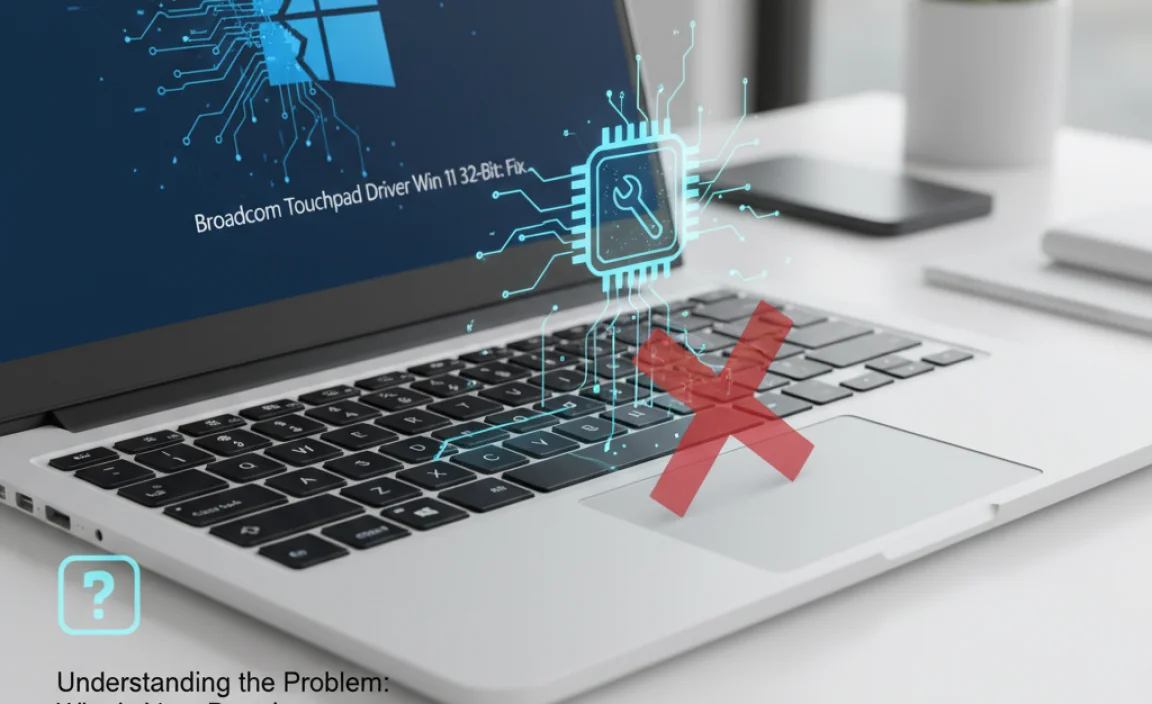
Several factors can contribute to a missing or malfunctioning Broadcom touchpad driver on Windows 11 32-bit. Identifying the root cause is the first step toward a definitive fix. Common culprits include:
Recent Windows Updates: Sometimes, a Windows update can introduce compatibility issues with existing drivers, leading to them being uninstalled or corrupted.
Driver Corruption: Drivers can become corrupted due to software conflicts, malware infections, or improper system shutdowns.
Accidental Uninstallation: In some cases, users might inadvertently uninstall the touchpad driver while attempting to manage other system components.
Hardware Issues: While less common, a faulty touchpad itself or its connection to the motherboard could be the underlying problem.
Incorrect Driver Installation: If a driver was installed manually, it might have been the wrong version or not installed correctly.
System File Corruption: Underlying Windows system file issues can sometimes affect driver functionality.
Troubleshooting Steps for Broadcom Touchpad Driver Win 11 32-Bit
Let’s dive into the practical steps you can take to address the missing Broadcom touchpad driver for Windows 11 32-bit. It’s advisable to proceed through these steps sequentially, as one might resolve the issue without needing to continue.
1. Check Device Manager: Your First Port of Call
Device Manager is the central hub for managing hardware and drivers on Windows. It’s the most straightforward place to start.
Access Device Manager: Right-click on the Start button and select “Device Manager.” Alternatively, press `Windows Key + X` and choose “Device Manager.”
Look for the Touchpad: Expand the “Mice and other pointing devices” or “Human Interface Devices” categories. Look for an entry that resembles your touchpad, often labeled as “HID-compliant touch pad,” “PS/2 Compatible Mouse,” or possibly something mentioning “Broadcom” or your laptop manufacturer.
Identify Driver Status: If there’s a yellow exclamation mark next to the device, it indicates a driver problem. If the device is missing entirely, you’ll need to try scanning for hardware changes.
Scan for Hardware Changes: Click on the “Action” menu in Device Manager and select “Scan for hardware changes.” Windows will attempt to detect the missing hardware and prompt you to install a driver.
2. Reinstall or Update the Broadcom Touchpad Driver
If Device Manager shows your touchpad but with an error, or if scanning for hardware changes doesn’t automatically resolve it, you’ll need to manually intervene.
If the Driver is Listed with an Error:
Right-click on the problematic touchpad entry.
Select “Update driver.”
Choose “Search automatically for drivers.” Windows will attempt to find and install the latest driver.
If that fails, select “Browse my computer for drivers” and then “Let me pick from a list of available drivers on my computer.” See if a generic touchpad driver is available.
If You Need to Uninstall and Reinstall:
Right-click on the touchpad entry.
Select “Uninstall device.”
Crucially, check the box that says “Attempt to remove the driver software for this device” if it appears.
Click “Uninstall.”
Restart your computer.
After restarting, go back to Device Manager, click “Action,” and select “Scan for hardware changes.” Windows should now try to detect the touchpad and install a default driver.
3. Obtain Drivers Directly from the Manufacturer
When Windows’ automatic search fails, the most reliable way to get the correct Broadcom Touchpad Driver Win 11 32-Bit is directly from your laptop manufacturer’s support website.
Identify Your Laptop Model: This is critical. Look for a sticker on the bottom of your laptop or check your system information (type `msinfo32` in the Run dialog).
Visit the Manufacturer’s Support Page: Go to the official website of your laptop brand (e.g., Dell, HP, Lenovo, Acer, ASUS).
Navigate to Drivers/Support: Find the “Support” or “Downloads” section.
Enter Your Model or Serial Number: Input your laptop’s specific model name, service tag, or serial number.
Select Your Operating System: Ensure you choose “Windows 11 32-bit.” This is vital as 32-bit drivers are distinct from 64-bit versions.
Locate the Touchpad Driver: Look under categories like “Mouse, Keyboard & Input Devices,” “Touchpad,” or similar. Download the driver file.
Run the Installer: Once downloaded, run the executable file. Follow the on-screen instructions carefully. You may need to restart your computer after installation.
4. Consider Generic Touchpad Drivers
If you absolutely cannot find a specific Broadcom driver for your model and OS, Windows often has generic touchpad drivers it can utilize.
In Device Manager, try right-clicking the touchpad (if it shows up with an error) and selecting “Update driver.”
Then, choose “Browse my computer for drivers” and “Let me pick from a list of available drivers on my computer.”
See if there’s a “HID-compliant touch pad” or a similar generic option you can select. This might offer basic touchpad functionality.
5. Run the Windows Troubleshooter
Windows has built-in troubleshooters that can automatically detect and fix common hardware and driver issues.
Go to “Settings” > “System” > “Troubleshoot” > “Other troubleshooters.”
Look for a troubleshooter related to “Hardware and Devices” or “Keyboard” (sometimes touchpad issues are categorized here).
Run the troubleshooter and follow any on-screen prompts.
6. System Restore: A Step Back in Time
If the problem started very recently, a System Restore point might be able to revert your system files and drivers to a state where the touchpad was functioning correctly.
Search for “Create a restore point” in the Windows search bar and open it.
Click “System Restore…” and follow the wizard.
Choose a restore point from before you noticed the touchpad issue. Note: This will undo recent system changes, including software installations and driver updates, but it will not affect your personal files.
7. Check for BIOS/UEFI Updates
While less common for driver-specific issues, sometimes a BIOS/UEFI update can resolve lingering hardware compatibility problems. This is an advanced step, so proceed with caution and follow your manufacturer’s instructions precisely.
Important Considerations for Windows 11 32-Bit
It’s worth noting that Windows 11 is primarily designed for 64-bit architectures. While a 32-bit version exists, finding specific drivers, especially for older hardware like some Broadcom components, can be significantly more challenging. Manufacturers are less likely to release updated drivers for 32-bit versions of newer operating systems. If you’re having persistent issues and can’t find a driver, consider if your hardware is still fully supported on a 32-bit Windows 11 installation.
Conclusion
Resolving a broadcom touchpad missing driver for windows 11 32 bit often involves a methodical approach, starting with basic checks in Device Manager and progressing to more specific solutions like downloading drivers from the manufacturer’s website. By following these steps carefully, you should be able to restore functionality to your touchpad and enjoy a smoother computing experience on your Windows 11 32-bit system. If all else fails, consult your laptop manufacturer’s support for further assistance.